

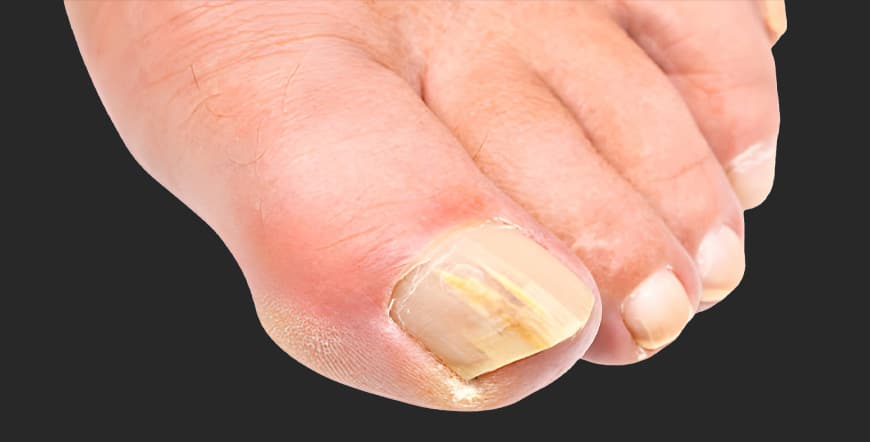
Types of Nail Fungus and the Best Treatment Methods in Iran
Onychomycosis is a common infection that occurs on the nails of the hands and especially the feet. This infection causes discoloration, thickening, peeling and brittleness of the nails. Fungi grow in warm, moist and dark environments. In the rest of this article, we will examine the cause, symptoms and ways to treat nail fungus in Shiraz.
Symptoms of Nail Fungus (How to Recognize It?)
Nail fungus is usually sudden and undetectable; in most cases, small and subtle changes first appear on the surface of the nail, which, if ignored, progress rapidly and cause deformity and even pain in the nail. Many people in the early stages mistake nail fungus for an injury or vitamin deficiency, which causes treatment to be delayed. Knowing the exact symptoms from the beginning can help you start treatment on time before the fungus reaches the root of the nail.
| Visual symptoms | Possible cause |
| Discoloration (yellow, brown, or green) | Fungal accumulation under the nail |
| Thickening and hardening of the nail | Fungal growth and keratin production |
| Brittleness and flaking | Weakening of the nail structure |
| Unpleasant odor | Chronic and resistant infection |
| Separation of the nail from the bed | Fungal progression |
If the nail is discolored and thickened, there is a 90% chance that it is fungal, but a definitive diagnosis is made with a fungal test.
Types of Nail Fungus (Onychomycosis Types)
There is not just one type of nail fungus; there are several different types based on where the infection starts, the severity of the infection, and the type of fungal agent. It is important to know the type of nail fungus because each type has a different treatment method — some respond to topical creams and medications, while others require oral or laser treatment. In this section, we will introduce the types of nail fungus so that you know which one is closest to your nail and choose the treatment path more accurately.
1. Fungus under the nail from the edge (the most common type)
Scientific name: Distal Subungual Onychomycosis
- Starts at the edge of the nail and moves towards the root
- Usually yellow or brown
- People at risk: Those who wear closed shoes a lot.
2. White Superficial Onychomycosis
- White spots appear on the surface of the nail
- Can be treated more quickly
It looks like white powder on the nail.
3. Proximal Subungual Onychomycosis
- Starts at the root (cuticle)
- Seen in people with diabetes or immunodeficiency
4. Yeast (Candida Nail Infection)
- Most often affects the fingernails
- Accompanied by inflammation around the nail (paronychia)
People at risk: Those whose hands are in contact with water (hairdressers, dishwashers).
Fotona laser in Iran
Fotona laser: Treatment, advantage, and disadvantage
Main causes of nail fungus
Nail fungus is not just caused by “dirt”. This infection can be the result of seemingly simple things such as prolonged exposure to a damp environment, improper nail trimming, wearing closed, non-breathable shoes, a weak immune system, or even diseases such as diabetes. When conditions are right for the fungus to grow, these microscopic organisms begin to grow and destroy the nail plate. Understanding the main causes of nail fungus will help you not only treat it, but also prevent it from returning.
Our suggestion: The right supplements for Treatment and fight against genital warts
Table: Important factors causing nail fungus and explanation of each
| Causes | Explanation |
| Wearing closed and sweaty shoes | Creating a warm and humid environment, which is the best conditions for fungus to grow. |
| Using shared manicure/pedicure tools | Direct transmission of fungus through contaminated tools (very common in unsanitary salons). |
| Diabetes and reduced immunity | A weak immune system is unable to fight the fungus. |
| Thyroid and circulatory problems | Reduced blood supply to the nail bed → Slow healing process and increased risk of infection. |
| Improper nail grafting and cuticle damage | If glue and implant materials penetrate the space under the nail or the cuticle is removed too much, the path for fungus to enter is opened. Moisture accumulates under the nail and provides an environment for fungus to grow. |
Ways to Treat Nail Fungus in Shiraz (Definite, Scientific, and Verified)
Nail fungus cannot be cured by leaving it alone and will only get worse. Below we will discuss these treatments:
- Drug treatments (Medicine)
- Antifungal solutions and varnishes (for mild to moderate cases)
| Product Name | Usage |
| Ciclopirox 8% Antifungal Lacquer | Used daily |
| Amorolfin | 1–2 times a week |
| Efinaconazole (Jublia) | New + More penetration |
- Oral medications (for severe cases)
| Drug | Treatment duration | Important Note |
| Terbinafine | 6–12 weeks | The most effective and first choice |
| Itraconazole | 12 weeks | Suitable for people who cannot take Lamisil |
Please note that the use of all these drugs requires a prescription and approval by a doctor and sometimes liver tests.
- Laser treatment
- Using the Fotona laser in Shiraz, which destroys the fungus by thermal destruction
- Painless and drug-free
- Suitable for diabetics and those with liver problems
Some common mistakes that prolong the treatment of nail fungus
Treatment of nail fungus in Shiraz is usually time-consuming, because the nail grows slowly and the fungus hides deep in the nail bed. However, many patients unintentionally prolong the treatment process with a few wrong behaviors or even cause the fungus to return.
Common mistakes made by patients:
- Arbitrarily stopping the medication before completing the treatment course
With the disappearance of symptoms, the fungus is still active in the inner layers of the nail.
- Not using antifungals continuously and according to the schedule
Discontinuous treatment causes resistance of the fungus and prolongs the healing process.
- Constantly wearing tight, non-breathable shoes
The moist, warm environment inside the shoe feeds and multiplies the fungus.
- Not drying your feet completely after a bath or pool
Fungus loves moisture — even a few drops are enough.
- Filing and manipulating nails without disinfecting the tools
Contaminated tools transfer the fungus to healthy nails.
- Hiding the fungus with nail polish, nail extensions, or filler
Disrupts oxygen supply and keeps moisture trapped under the nail → the fungus becomes more severe.
- Avoiding seeing a doctor and self-treating with home remedies
Vinegar and oils do not kill the fungus; they only temporarily improve the appearance.
Nail fungus treatment can sometimes take 6 to 12 months for a new nail to grow.
How to prevent nail fungus?
Nail fungus usually starts quietly; First, slight discoloration, then thickening of the nail, and finally brittleness and an unpleasant odor. The important thing is that treating nail fungus takes time, sometimes months, but the good news is that you can prevent this problem with a few simple habits. Preventing nail fungus means eliminating moisture, reducing contact with contaminated environments, and promoting nail health. If you have a history of nail fungus or a weak immune system, these tips are even more essential.
1. Keep your feet dry, especially between your toes
o Fungus loves moisture; never leave your feet wet after a bath or pool.
2. Wear breathable shoes and cotton or antiperspirant socks
o Tight, plastic shoes are the ideal environment for fungus.
3. Change your socks daily
o Especially if your feet sweat.
4. Avoid sharing shoes in gyms or clubs
o Shared slippers are one of the main sources of fungus transmission.
5. Disinfect shoes and shower floor
o You can use antifungal spray or alcohol.
6. Do not use shared manicure/pedicure tools
o Be sure to take your personal tools or make sure the tools are sterile.
7. Keep nails short and clean regularly
o Long nails retain moisture and dirt.
8. Avoid nail extensions or filler polish on weak nails
o Nails not breathing = a suitable environment for fungus.
9. Strengthen the immune system (enough water, proper nutrition, vitamin D, zinc)
o Fungus grows more easily in a weak body.
10. Use antifungal powder or spray inside shoes
• Especially if your daily work is standing or your feet sweat.
Golden tip:
Preventing nail fungus means keeping dry and reducing contact with a contaminated environment.
When should you see a doctor for nail fungus treatment in Shiraz?
Home treatment is not enough if you have the following:
- More than 50% of the nail surface is involved
- There are pain and bad odor
- You have an underlying disease such as diabetes
Summary
Nail fungus is not a dangerous disease, but it does not heal on its own and is time-consuming.
The best treatment for nail fungus in Shiraz is a combination of topical medication + oral solution + hygiene and prevention.
For a completely free specialist consultation and to book an in-person appointment with a doctor at Irsa’s dermatologists’ clinic, contact our experienced consultants by calling the landline numbers listed on the contact us page or by mobile phone and WhatsApp number 00989170626693.
Get your free consultation with Irsa team right here
WhatsApp: 00989170626693
Email: irsaarabic@gmail.com
www.youtube.com/@irsaclinic
www.facebook.com/irsaclinic
Also read:
The Best Hair Transplant Clinic in Iran